
Great News, Freedom Health Supporters, We Ship Worldwide!
Back

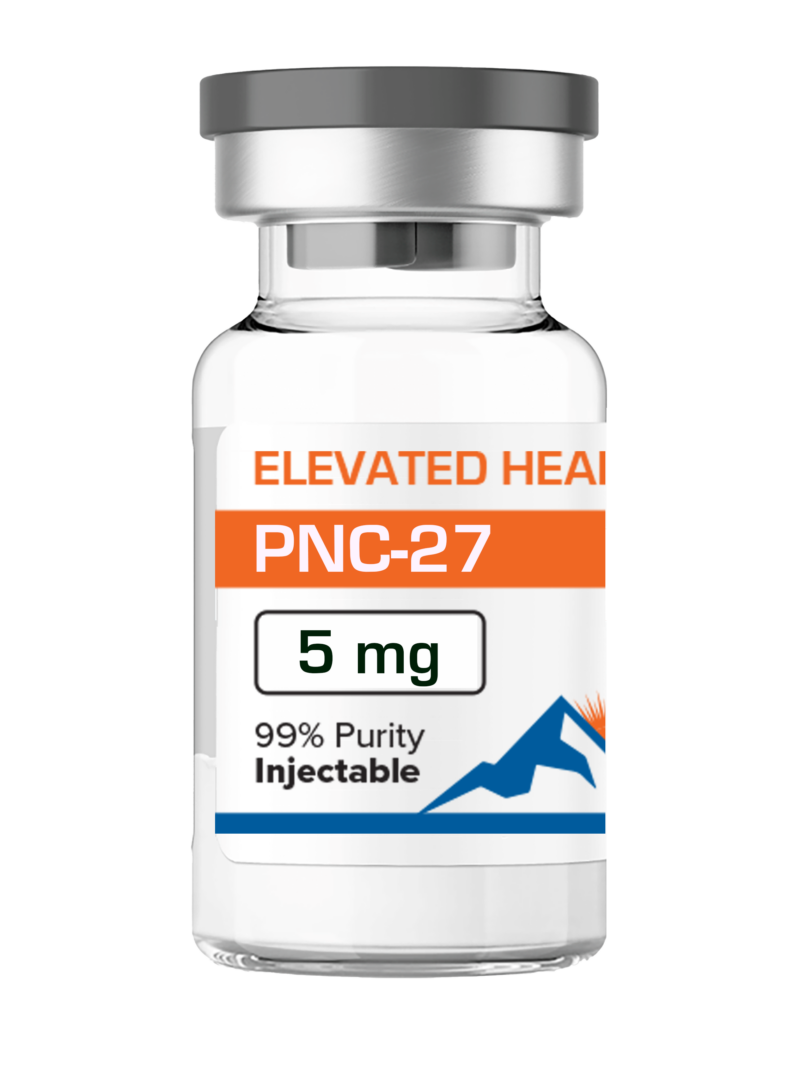
PNC-27 Anti-Cancer Peptide


Overview:

PNC-27 was initially developed as an agent for combatting HIV.  However in research trials, PNC-27 exhibited a remarkable capability to attach to cancer cells, triggering their demise while leaving healthy cells unharmed.   It is derived from the third helix of the anti-cancer peptide α-helical segment of p53 (ASPP2), a protein involved in tumor suppression.

The PNC-27 peptide is a non-toxic substance that exclusively induces the death of cancer cells, without affecting other healthy cells. It accomplishes this by binding to the membranes of individual cancer cells, creating perforations in these membranes. These breaches cause rapid implosion, resulting in the swift demise of the cells due to the osmotic pressure disparity between the interior and exterior of the tumor cells.


Actions:

PNC-27 achieves this action by virtue of its affinity for binding to a protein called HDM-2, which is present in all cell membranes of cancer cells. Upon administration of the PNC-27 peptide, it promptly homes in on the HDM-2 located within the membranes of cancerous cells. By binding to these proteins, it generates pores or openings in the cell membrane, leading to “membranolysis” or the breakdown of the cell membrane. Consequently, this process culminates in the destruction and death of the cancer cell.

Extensive research and studies have demonstrated the remarkable efficacy of PNC-27 across various solid and hematopoietic (blood) cancers, including but not limited to:

  1. Ovarian
  2. pancreatic
  3. breast
  4. leukemia
  5. melanoma
  6. colon
  7. Cervical
  8. and several other cancer lines.


Body Process:

In animal studies where the PNC-27 peptide is administered, several noteworthy observations have been made regarding successful outcomes.

Pain Reduction:
Researchers have reported a subjective decrease in pain levels in subjects, typically occurring within about a week after administration of the peptide

Flu-Like Symptoms:
Around the 3-week mark, subjects often exhibit flu-like symptoms. This may suggest that the subjects’ immune systems are responding to the death of cancer cells.

Increased Lactate Dehydrogenase and Bilirubin Levels: 
At approximately 6 weeks, there tends to be an increase in levels of lactate dehydrogenase and bilirubin. This may indicate substantial tumor breakdown in successful research outcomes.

Tumor Changes:
Around the 10-week mark, tumors often undergo significant changes. They become softer and more pliable. Some increase in the size of the tumor may be observed, primarily due to inflammation resulting from the immune system response.

Improved Well-Being:
By the end of 3 months, researchers frequently observe increased energy levels and a reduction in cancer-related symptoms.


These findings support that PNC-27 peptide administration leads to positive therapeutic outcomes, including pain relief, immune system activation, and the breakdown of cancerous tumors, ultimately improving the overall well-being of subjects in these studies.

This tumour response curve is very similar to what we see with our anti-cancer protocol.


Research

Extensive research and studies have demonstrated the remarkable efficacy of PNC-27 across various solid and hematopoietic (blood) cancers,

A progression of the available research is as follows:

In a 2006 study published in the International Journal of Cancer, researchers investigated the effects of PNC-28, a precursor to the PNC-27 peptide, which shares similar structural and functional characteristics. The study focused on its ability to selectively inhibit the growth of pancreatic cancer cells in vivo.

A 2014 study published in Annals of Clinical & Laboratory Science, researchers concluded that the anti-cancer peptide, PNC-27, induces necrosis in tumor cells of a poorly differentiated non-solid tissue mammalian leukemia cell line, and this effect depends on the expression of HDM-2 in the plasma membrane of these cells.

And in a 2020 study, an experiment was conducted to determine the PNC-27 peptide potential on non-stem cells from the leukemia cell lines. Researchers reported the study focused on “acute myelogenous leukemia cell lines: U937, acute monocytic leukemia; OCI-AML3, acute myelomonocytic leukemia and HL60, acute promyelocytic leukemia.” These particular cell lines were selected due to their distinct phenotypic and genotypic characteristics, which might shed light on the peptide’s varying potential across different cancer cell types. After peptide exposure, it was observed that the HDM-2 protein appeared to be highly expressed in all leukemia cells, which were all targeted by the PNC-27 peptide.

In a more recent 2024 study by Krzesaj PK, et al, the authors demonstrated an additional mechanism: that PNC-27 also interacts directly with mitochondrial membranes in cancer cells. This interaction causes mitochondrial disruption, which further contributes to cell killing. The dual targeting (plasma membrane HDM-2 pores + mitochondrial effects) provides a more complete picture of how PNC-27 induces rapid necrosis in cancer cells while sparing normal cells that lack the membrane protein HDM-2 expression.

And most recently two 2025 papers, from the SUNY Downstate group that has developed and led most PNC-27 research, from Krzesaj et al. is a companion/parallel work to the Miller et al. (2025) study in Medical Research Archives. This research confirms that PNC-27 was cytotoxic to the cancer cells even at relatively low doses, but showed no significant effect on normal cervical cells. Cancer cell killing correlated with high expression of HDM-2 protein in the plasma membranes of the tumor cells (absent in normal cells), consistent with the peptide’s known mechanism of binding membrane HDM-2 to induce necrosis. 

Very importantly, the authors also discovered that circulating ketone bodies significantly enhanced PNC-27’s cytotoxicity against the cervical cancer lines, lowering the IC50 values (sometimes by nearly 2- to 3-fold depending on the line). This suggests a potential synergistic effect when combining PNC-27 with metabolic interventions such as the ketogenic metabolic therapy, AKA a ketogenic diet.


Dosage Regime:

200-500mcgs per dose administered daily of for up to 12 weeks.  At that time it is important to re-assess and take a minimum of 30 days break.

The use of a detoxifying, anti-oxidant like PineBark-400 is highly recommended to mitigate the toxic effects of the cancer cell’s death.


References:

1. Lane DP. (1992). p53, guardian of the genome. *Nature*. 358(6381):15-16. DOI: 10.1038/358015a0. PMID: 1614522.

2. Kanovsky M, et al. (2001). (Related foundational work on p53-derived peptides including PNC-28). Peptides from the amino terminal mdm-2-binding domain of p53. *Proc Natl Acad Sci U S A*.

3. Bowne WB, et al. (2008). The penetratin sequence in the anticancer PNC-28 peptide causes tumor cell necrosis rather than apoptosis of human pancreatic cancer cells. *Ann Surg Oncol*. 15(12):3588-3600. DOI: 10.1245/s10434-008-0147-0. PMID: 18931881.

4. Hoskin DW, Ramamoorthy A. (2008). Studies on anticancer activities of antimicrobial peptides. *Biochim Biophys Acta*. 1778(2):357-75. DOI: 10.1016/j.bbamem.2007.11.008.

5. Sookraj KA, et al. (2010). The anti-cancer peptide, PNC-27, induces tumor cell lysis as the intact peptide. *Cancer Chemother Pharmacol*. 66(2):325-31. DOI: 10.1007/s00280-009-1166-7. PMID: 20182728.

6. Sarafraz-Yazdi E, et al. (2010). Anticancer peptide PNC-27 adopts an HDM-2-binding conformation and kills cancer cells by binding to HDM-2 in their membranes. *Proc Natl Acad Sci U S A*. 107(5):1918-23. DOI: 10.1073/pnas.0909364107. PMID: 20080680.

7. Davitt K, et al. (2014). The anti-cancer peptide, PNC-27, induces tumor cell necrosis of a poorly differentiated non-solid tissue human leukemia cell line that depends on expression of HDM-2 in the plasma membrane of these cells. *Ann Clin Lab Sci*. 44(3):241-8. PMID: 25117093.

8. Sarafraz-Yazdi E, et al. (2015). Ex vivo Efficacy of Anti-Cancer Drug PNC-27 in the Treatment of Patient-Derived Epithelial Ovarian Cancer. *Ann Clin Lab Sci*. 45(6):650-8. PMID: 26663795.

9. Alagkiozidis I, et al. (2017). Synergy between Paclitaxel and Anti-Cancer Peptide PNC-27 in the Treatment of Ovarian Cancer. *Ann Clin Lab Sci*. 47(3):271-281. PMID: 28667027.

10. Thadi A, et al. (2020). Targeting Membrane HDM-2 by PNC-27 Induces Necrosis in Leukemia Cells But Not in Normal Hematopoietic Cells. *Anticancer Res*. 40(9):4857-4867. DOI: 10.21873/anticanres.14488.

11. Sarafraz-Yazdi E, et al. (2022). PNC-27, a Chimeric p53-Penetratin Peptide Binds to HDM-2 in a p53 Peptide-like Structure, Induces Selective Membrane-Pore Formation and Leads to Cancer Cell Lysis. *Biomedicines*. 10(5):945. DOI: 10.3390/biomedicines10050945.

12. Pincus MR, et al. (2024). Poptosis or Peptide-Induced Transmembrane Pore Formation: A Novel Way to Kill Cancer Cells without Affecting Normal Cells. *Biomedicines*. 12(6):1144. DOI: 10.3390/biomedicines12061144. PMID: 38927351.

13. Krzesaj PK, et al. (2024). Anti-Cancer Peptide PNC-27 Kills Cancer Cells by Unique Interactions with Plasma Membrane-Bound hdm-2 and with Mitochondrial Membranes Causing Mitochondrial Disruption. *Ann Clin Lab Sci*. 54(2):137-148. PMID: 38802154.

14. Miller AI, et al. (2025). PNC-27 Kills Cervical Cancer Cells but Not Untransformed Cervical Cells, an Effect that is Enhanced by Ketone Bodies. *Medical Research Archives*.

15. Krzesaj PK, et al. (2025). HDM-2-Targeting Peptide PNC-27 Kills Cervical Cancer Cells but not Normal Cervical Cells. *Annals of Clinical & Laboratory Science*. 55(3):347-353. PMID: 40750238.


Freedom Health | Your source of Ivermectin and Anti Big pharma medications in Canada | Pill form ivermectin

Subscribe to our newsletter

Subscribe to our newsletter to receive tips, and news from our experts here at Freedom Health! Don't worry, it's not a spam-filled inbox killer!